


14 Sep Roof & Ceiling Insulation Guide for SA Homes
If your ceiling isn’t insulated, your roof space is doing more to set the temperature of your home than your heater or aircon is. We’ve recently added insulation to our range, including Knauf glasswool, so here’s a plain-language guide to what R-values mean, what South African building regulations require, and how to choose the right thickness for a Western Cape ceiling.
What an R-Value Actually Measures
R-value measures how well a material resists the flow of heat, expressed in m²·K/W. The higher the number, the better the material stops heat moving through it, in either direction. It’s not about blocking heat from entering in summer specifically, or keeping it in during winter specifically; it’s the same resistance working both ways. A thicker layer of the same insulation type generally means a higher R-value, which is why glasswool comes in a range of thicknesses rather than one standard roll.
R-values also add together when materials are layered: the insulation itself contributes most of the total, but the ceiling board, the roof construction, and any enclosed air gaps each add a smaller amount on top. That’s why a compliance figure refers to the total roof assembly rather than the insulation product alone.
The explanation of R-value is a useful starting point if you want the underlying physics rather than just the building-code number.
What SANS 10400-XA Requires
South Africa’s building regulations set a minimum total roof R-value under SANS 10400-XA, the energy usage section of the National Building Regulations.
Following the 2021 update, most of the country falls under a single minimum roof R-value requirement, with a slightly lower figure permitted in the high-humidity coastal strip that includes areas like Durban. The regulation covers new builds and qualifying alterations, and it’s usually satisfied by installing insulation of the correct thickness rather than by any special construction technique.
Because the exact figures are reviewed periodically and can differ by energy zone, always confirm the current minimum for your specific project against the latest version of the standard rather than relying on a number from an old spec sheet.
Glasswool vs the Alternatives
Glasswool, like our Knauf range, is the most common ceiling insulation in South Africa because it’s affordable, non-combustible, and simple to install between standard joist spacings without specialist tools.
It comes in rolls that are typically perforated for easy cutting to width, and manufacturers now bind the fibres with bio-based binders rather than older formaldehyde-based ones, which makes it noticeably less itchy to handle than the glasswool many contractors remember from years back.
The main alternatives are rigid foam boards, which cost more but work well in tight roof spaces or where a board rather than a roll is easier to fit, and reflective foil systems, which perform differently and are usually paired with an air gap rather than compared directly on R-value terms.
Polyester batts, made from recycled fibre, are a third option some homeowners prefer for their softer feel and lack of any fine airborne particles, though they typically come at a higher cost per roll than standard glasswool. For a straightforward retrofit into an existing pitched roof with standard joist spacing, glasswool remains the simplest option to source and install.
What This Means for a Western Cape Ceiling
Cape Town’s winters are wet and cold enough that heat loss through an uninsulated ceiling is a real cost over a season, and summer roof-space heat gain works the same way in reverse. Getting the thickness right matters more than the brand: install to the R-value your energy zone requires, not to whatever thickness happens to be in stock.
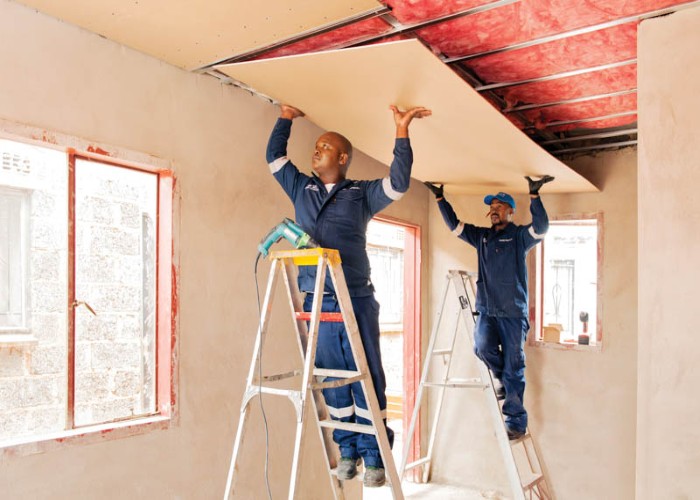
If you’re combining insulation with a ceiling upgrade, our Nutec ceiling boards range pairs well with a glasswool layer above it, since the board handles the visible finish while the insulation above does the thermal work.
Installing Insulation the Right Way
Insulation only performs to its rated R-value if it’s laid without gaps, compressed sections, or thermal bridges where joists are left exposed. Combi-cut rolls are scored to match standard joist centres, which speeds up a DIY install and reduces waste. Wear gloves and a mask when handling glasswool, even the lower-irritation formulations, and keep insulation clear of recessed light fittings unless it’s rated for that use.
For a wider look at how insulation fits into a full roof build, our roofing sheets range and this guide are a natural pair for anyone planning a new roof from the structure up. If Nutec is already part of your ceiling or wall plan, our Nutec products guide and our page on the durability of Nutec boards both cover how fibre cement performs alongside insulation in a finished roof space.
Why This Matters Beyond Comfort
Uninsulated roofs are consistently one of the largest single sources of unwanted heat transfer in a home, which is the reasoning behind making thermal insulation compulsory for new buildings in the first place.
Beyond regulatory compliance, a correctly insulated ceiling reduces the load on heating and cooling appliances, which is where the long-term electricity saving comes from.
Insulation SA’s guide to SANS 10400-XA is a good next read if you want the full breakdown of energy zones and compliance routes before specifying a project.
CONTACT US today for more information on your roof and ceiling insulation needs.