


14 Sep Fixing Big Six Roof Sheets: Ridge, Nails & Birds
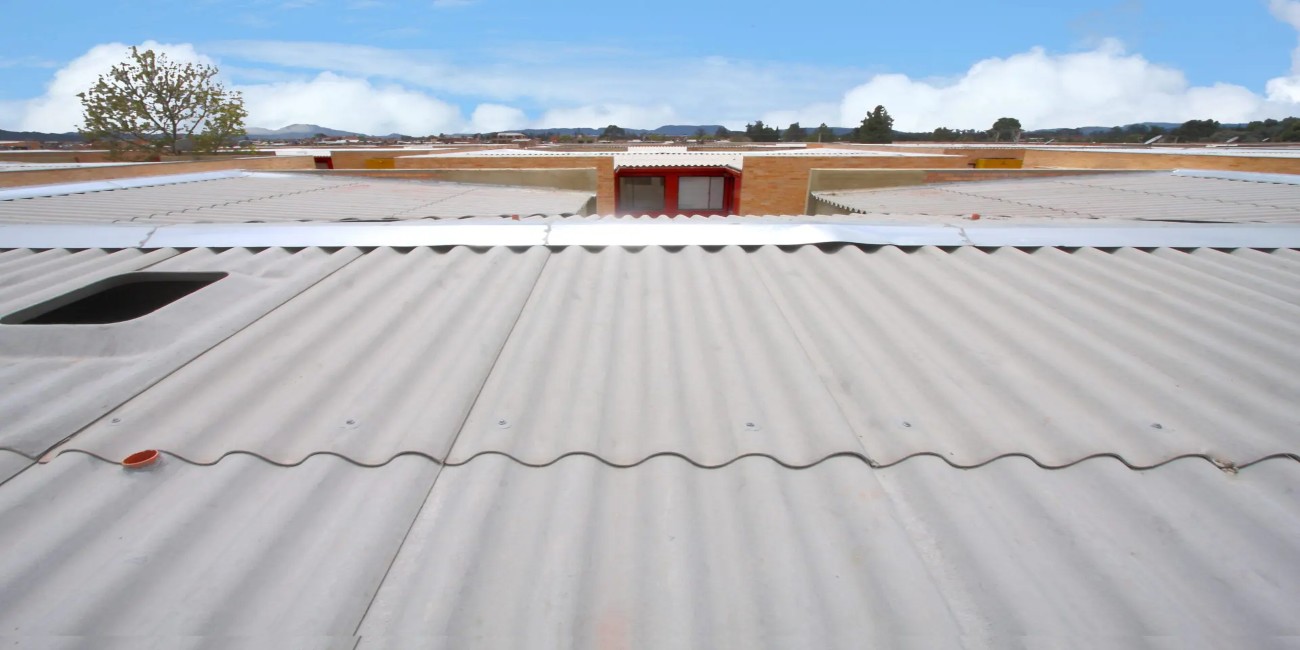
Big Six is our biggest-selling roof sheet, but getting a lasting result out of it comes down to a handful of details most guides skip: the right fastener, a properly detailed ridge, and closing the profile off so birds can’t get in underneath it.
If you’re working from our Canadian Pattern installation guide, note that Big Six is a different profile with its own fixing requirements, covered below.
Copper Nails vs Screws: Which to Use
Copper nails have been the traditional fixing for fibre cement roof sheets for decades, and they’re still specified because copper won’t react with the cement the way some coated steel fasteners can over time in a damp roof space.
Screws with a bonded washer are the more common modern choice, mainly because they clamp the sheet down rather than relying on the nail head to hold it, which matters more on a low-pitch roof where wind uplift is a bigger factor.
Whichever fastener you use, don’t overtighten it. Fibre cement is brittle in compression around a fixing point, and a fastener driven in too hard will crack the sheet at the hole even if the crack doesn’t show up until months later.
A bonded washer should be seated firmly enough to seal against water without deforming, which in practice means stopping as soon as you feel resistance rather than driving the fastener home the way you would into timber.
If you’re re-roofing over an existing structure, check the condition of the purlins before fixing; a fastener driven into a soft or rotten purlin won’t hold the sheet down regardless of how well the fastener itself is specified.

Getting the Ridge Right
Big Six ridge capping comes as a male and female pair, with the male ridge fitting over the female at each join so water runs off the overlap rather than into it. Get the lay direction wrong and you’ll get a leak at every joint, not just at the exposed edge.
Work from the end of the roof that faces away from the prevailing wind and rain, and check the overlap direction on our Big Six ridge capping product page before you start, since male and female pieces look similar from the ground but aren’t interchangeable.
Finials at the end of the ridge run need the same attention: they close off the last exposed corrugation and are easy to leave out if you’re working quickly, but skipping one leaves an open channel at exactly the point where wind-driven rain hits hardest.
Bird Proofing the Open Ends
The Big Six profile’s corrugations leave open channels at the end of each sheet, right where it meets the ridge or barge, and birds will find their way into a roof space through them if they’re left open.
Big Six bird proofing strips are moulded to match the corrugation profile exactly, so they close off each channel without leaving gaps a bird can still squeeze through. It’s a small, inexpensive part of the job, but it’s the difference between a roof space that stays clean and one that needs a nest cleared out of it every spring.
Safe Walking on Big Six Sheets
Fibre cement sheeting is not designed to be walked on directly, and Big Six is no exception.
The UK Health and Safety Executive’s guidance on fragile roof surfaces specifically names fibre cement sheeting as a fall risk, and the same physical reality applies here: the sheet can look solid and still fail suddenly under a person’s weight, particularly once it has aged or if it’s damp.
Use roof ladders or crawl boards that spread your weight across the purlins rather than stepping directly on the sheet, and never step in the centre of a span between purlins. If the roof is old enough that you’re not certain of its condition, treat it as fragile until someone can confirm otherwise.
Putting It Together on Install Day
Work from the bottom row up, lapping each sheet over the one below it, and check the cover width as you go rather than only at the end of the row.
Fix through the crown of the corrugation, not the trough, since water sits in the trough and a fixing there is more likely to leak over time.
Once the sheeting is down, finish with the ridge capping and bird proofing before you take the scaffolding down. Both are easy to forget once the sheets themselves are laid, and both are far more awkward to add later once access has been removed.
Our guide to selecting fibre cement roof sheets is worth reading first if you haven’t finalised sheet thickness and length for the project yet.
What Big Six Sheets Are Made Of
Big Six sheets are fibre cement, a composite of cement reinforced with cellulose fibres rather than the asbestos used in older generations of the material. That composition is what makes the sheet strong in the corrugation but brittle at a drilled or nailed point, which is the reasoning behind most of the fixing advice above.
Our Big Six Roof Sheet product page carries the manufacturer’s technical sheet and full installation guideline if you need the complete specification alongside this guide.
CONTACT US today for all your roof sheeting needs.